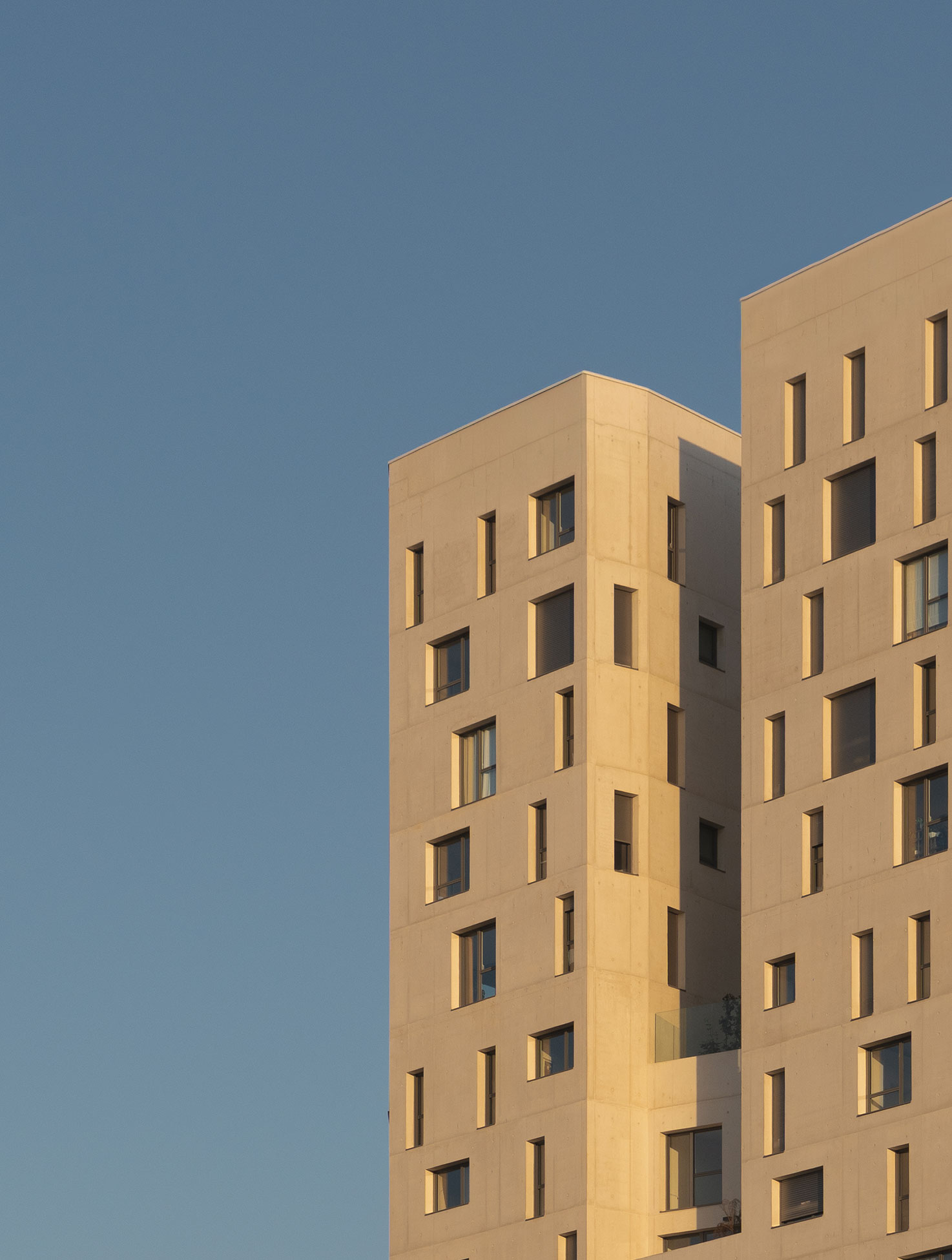
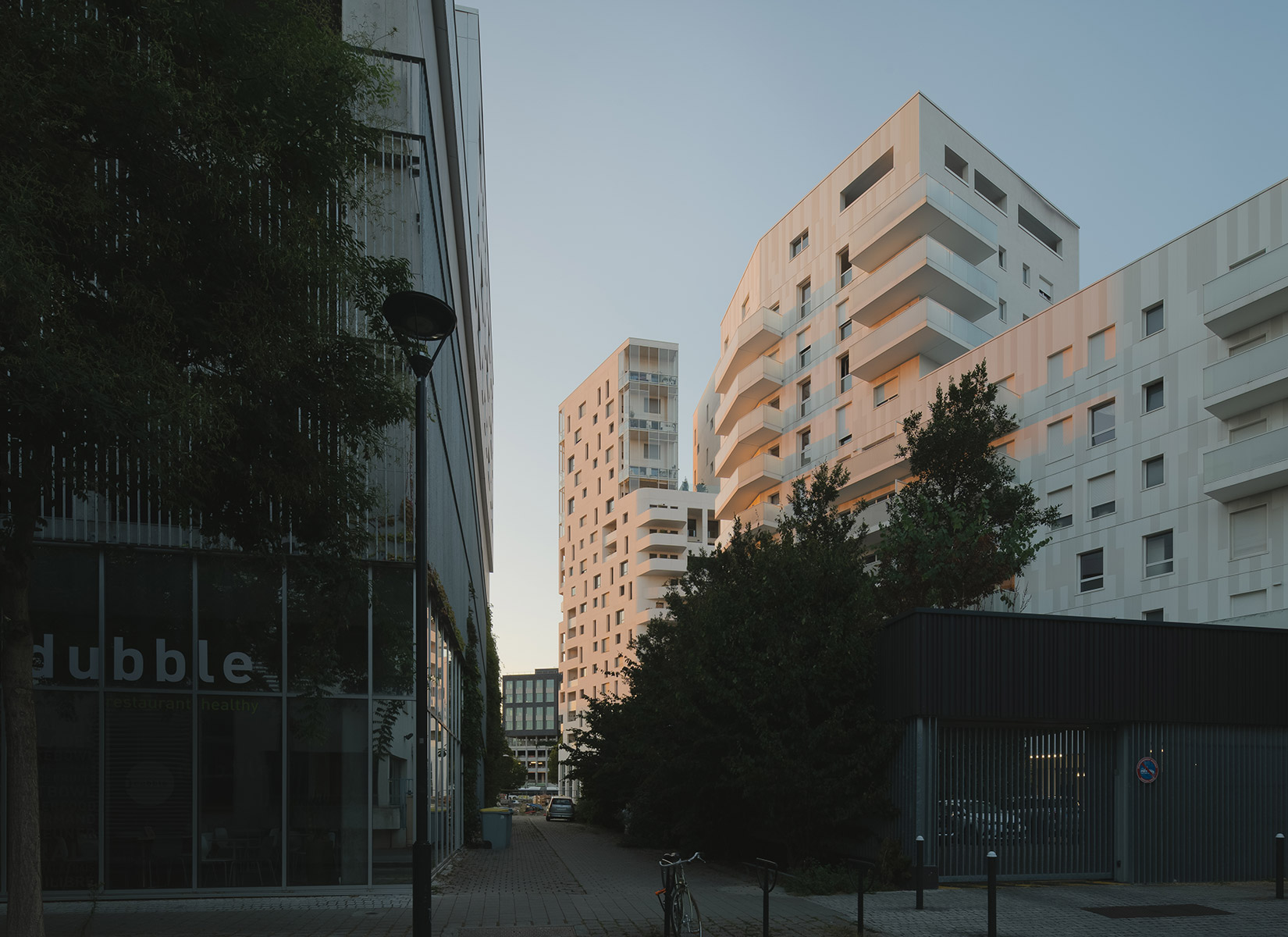
The program consists of two buildings positioned on either side of a mineral forecourt. The first building is a 17-storey tower that integrates a wide variety of uses: 68 housing units and their ancillary spaces, offices, a retail space, a shared area dedicated to residents, and an electrical transformer station.
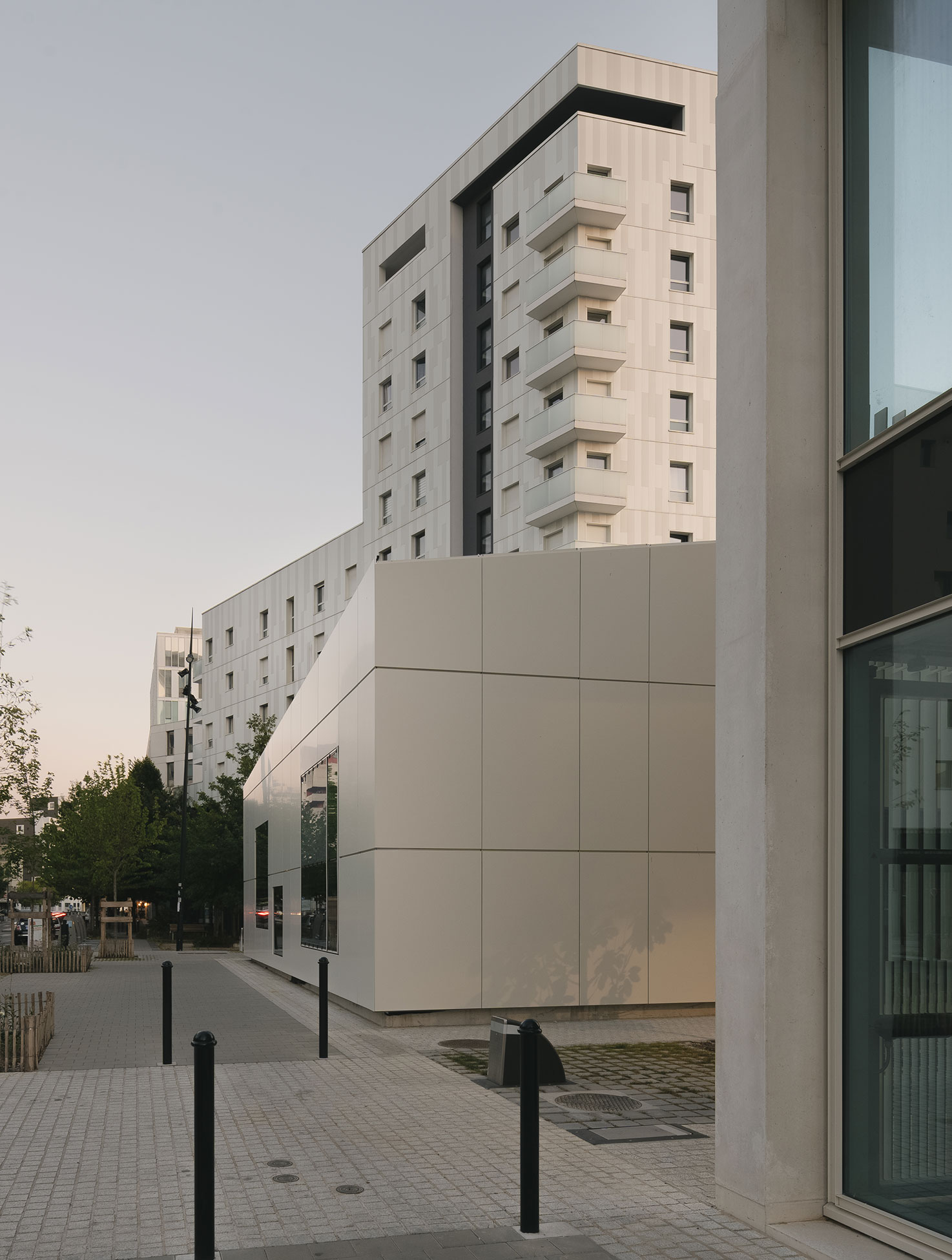
The second trapezoidal building hosts a bar-restaurant open to the public
PHOTOS BY Pierre Leibar
PHOTOS BY Pierre Leibar
PHOTOS BY Pierre Leibar
A sense of lightness
Aware that we were designing a large-scale building, visible from downtown Nantes, we immediately questioned the notion of lightness. How could we ensure that the whole ensemble would not appear visually too imposing?
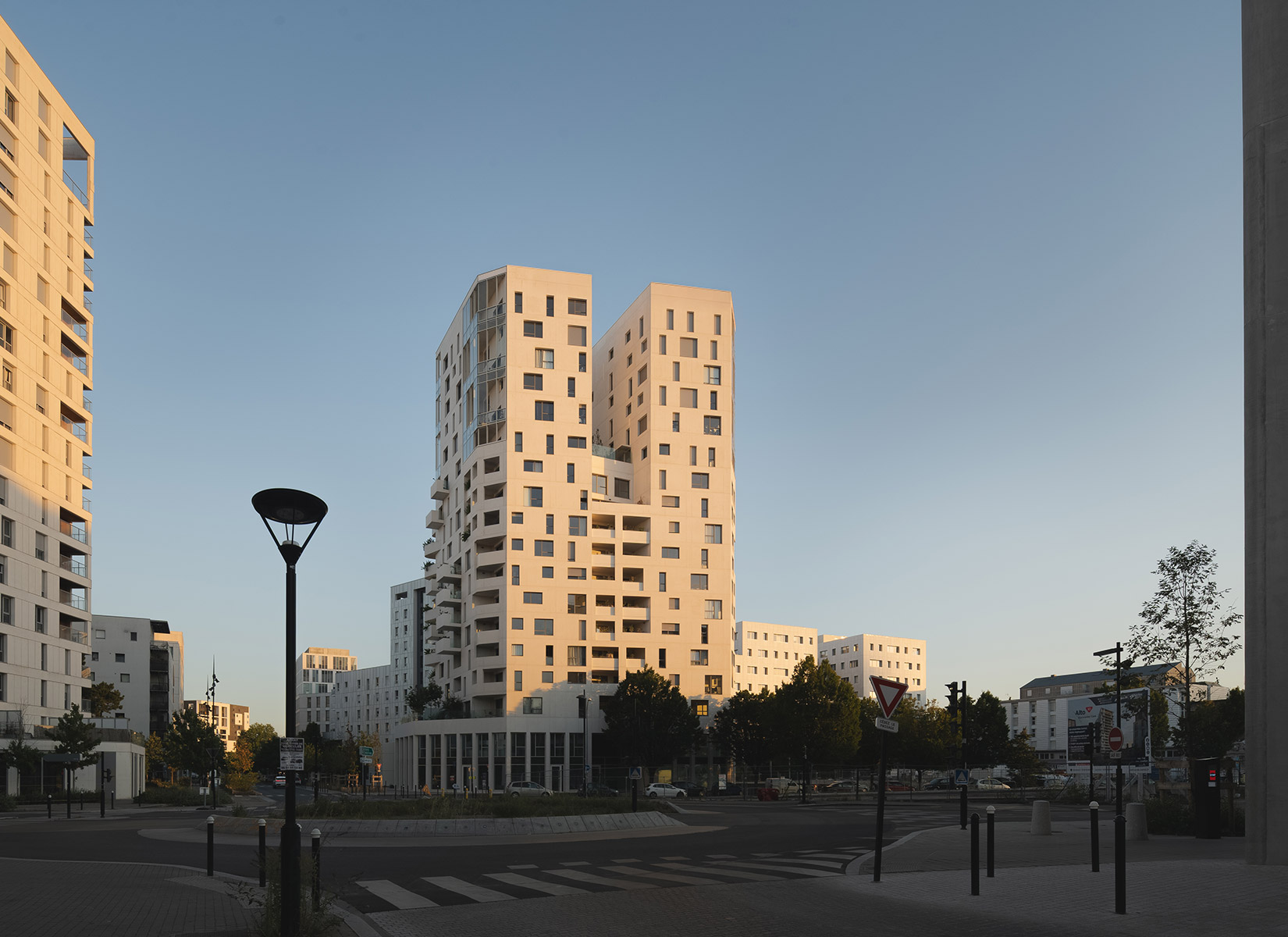
The first element contributing to this perceived lightness is the visual permeability of the ground floors. In both the tower and the restaurant building, generously glazed ground levels allow pedestrians’ gaze to pass through the structures.
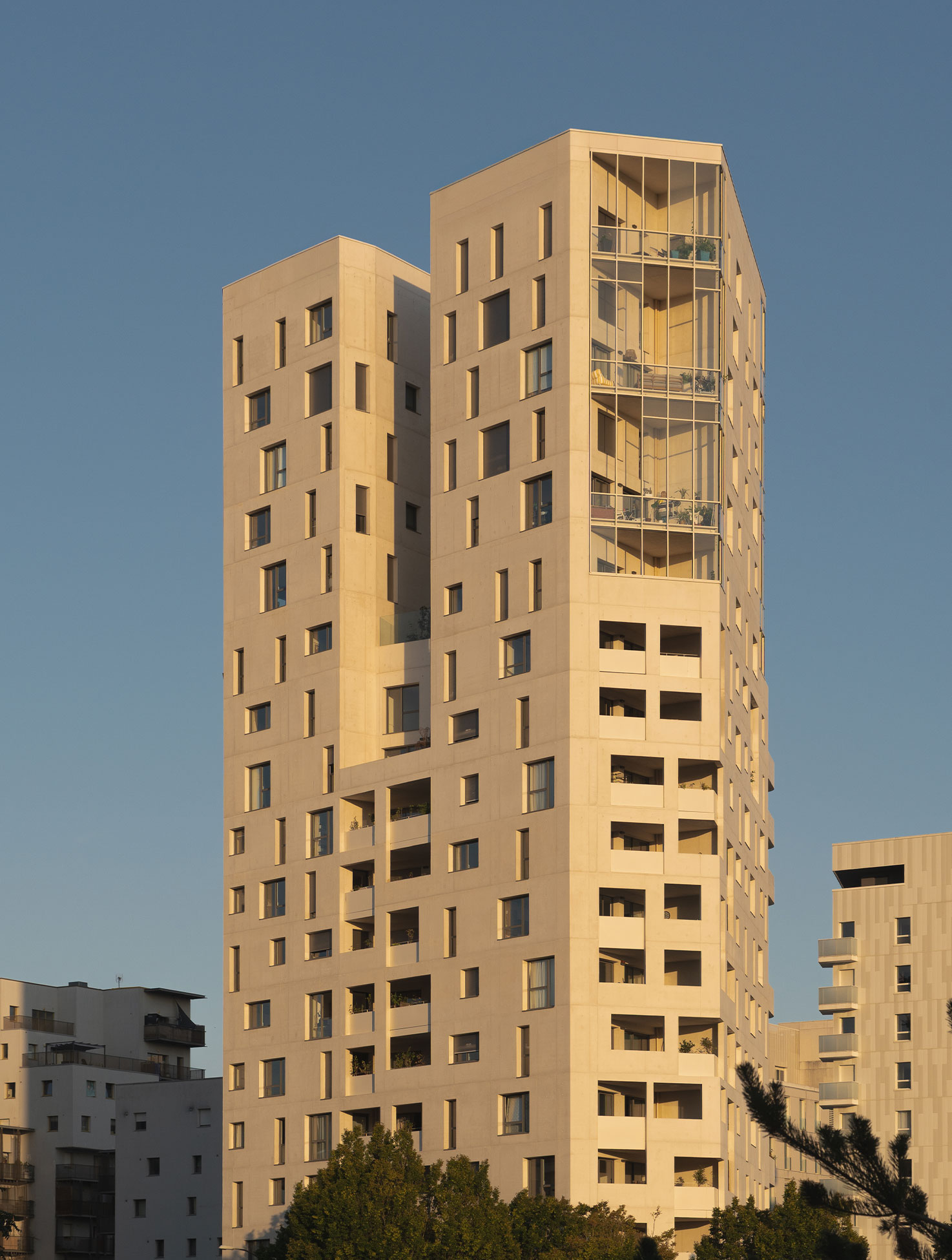
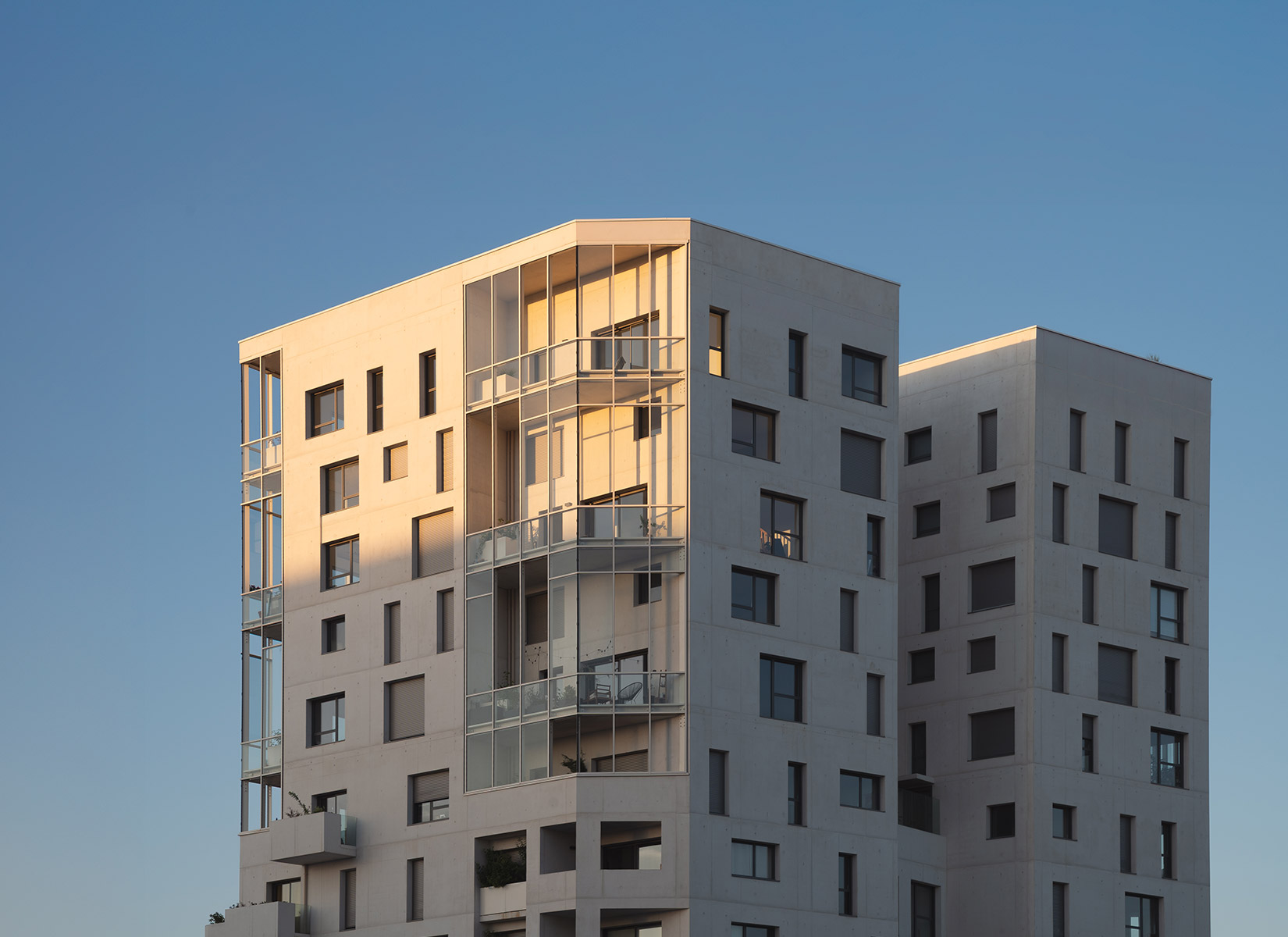
The shape of the tower was also central to our reflections, and we explored several approaches. A monolithic, uniform tower quickly appeared visually heavy. We therefore opted for a structure with a unified base, but with dissociated extremities. The “tower” splits along the North–South axis into two distinct volumes with sharp angles, contrasting with the soft curves of the intermediate layer. This architectural choice brings elegance and a sense of lightness to an edifice that, by nature, was meant to be imposing. As a consequence of this configuration, the two ends create a recess that we decided to make use of. We designed a shared garden in this void, conceived as a meeting place fostering conviviality among residents.
PHOTOS BY Pierre Leibar
PHOTOS BY Pierre Leibar
PHOTOS BY Pierre Leibar
PHOTOS BY Pierre Leibar
Vegetation
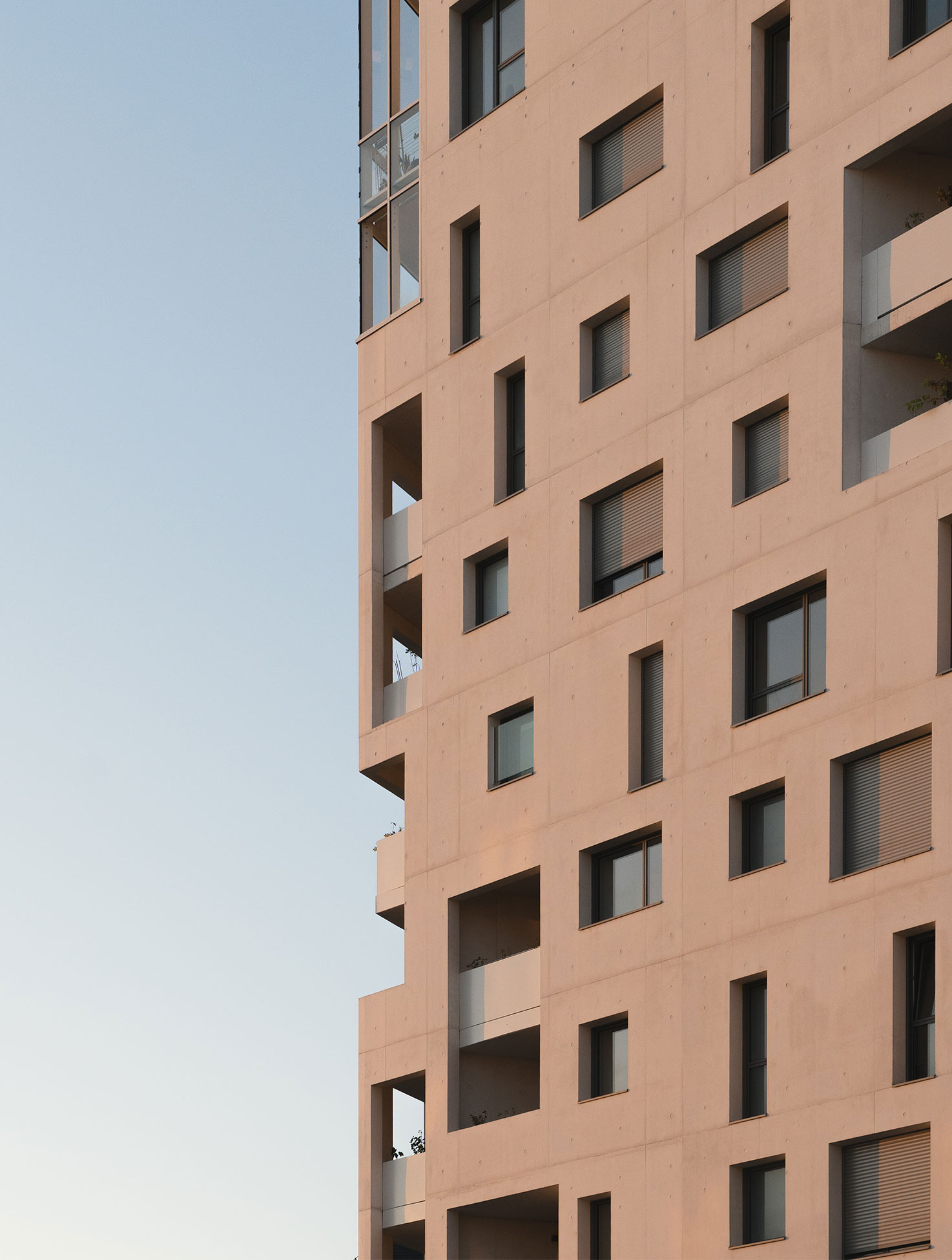
Vegetation is a true cornerstone of this project. Omnipresent, it acts as a material in its own right. In line with the urban design guidelines for the block, the project literally extends the existing vegetation on site, leading it up along the eastern façade and allowing it to filter through the project as a whole.
The landscape thus structures the architecture and defines the various spaces, both private and shared.
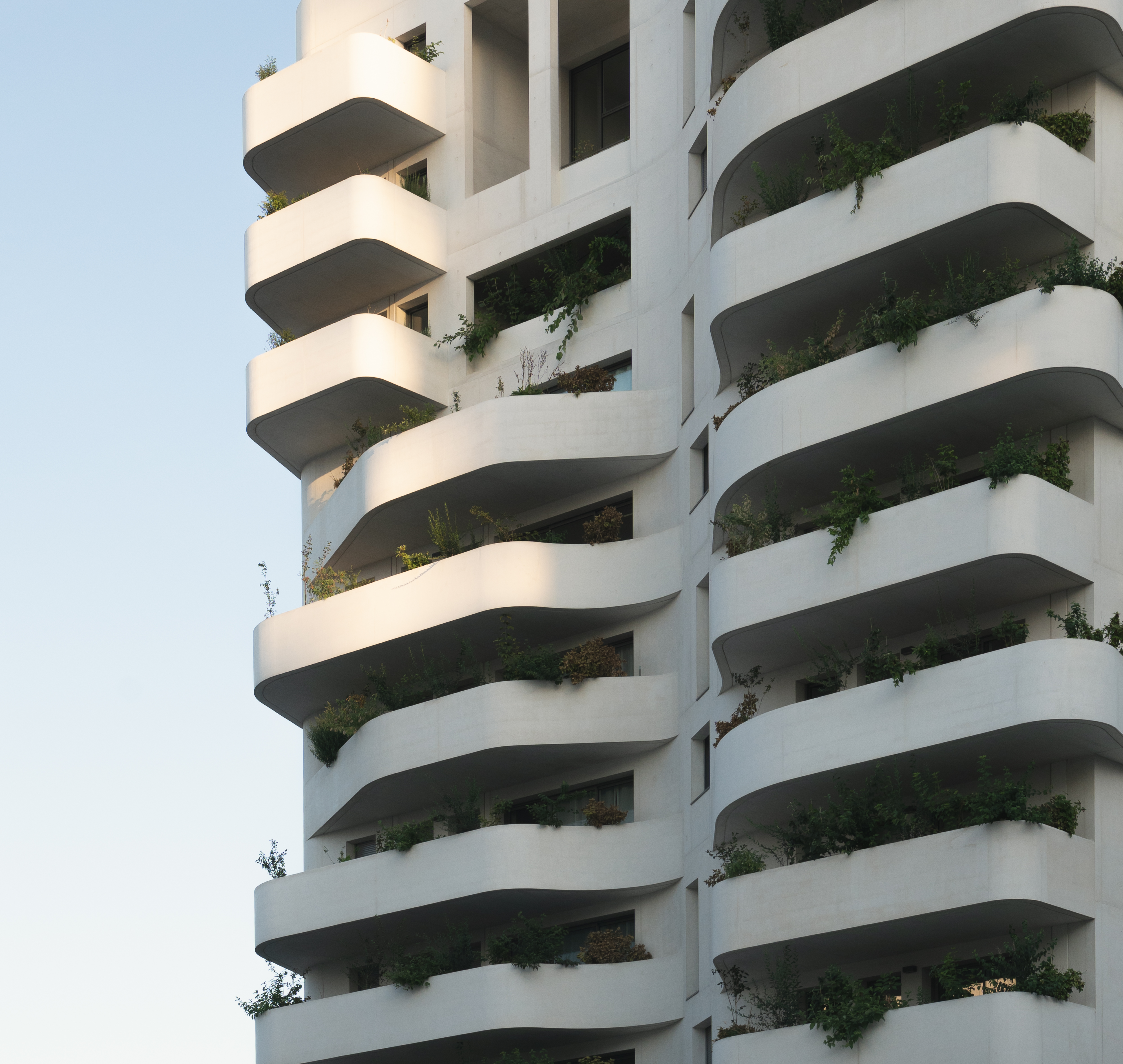
This greenery colonizes and dresses the mineral façade. It forms what could be considered the “fifth façade” for all terraces, becoming alternately a hanging garden on level R+1, a garden and living space on level R+11, or a unifying element connecting all recesses and volumetric protrusions of the project. Vegetation is present at every level, including the rooftop terrace of the top floor.
A partnership with Atelier Ruelle
To fully understand our approach to this project, it is important to revisit the work of Atelier Ruelle (led by Gerard Penot), which designed the urban plan for the neighborhood.
One of Mr. Penot’s fundamental principles was to design the tower façade by façade, in order to offer varied relationships with the urban fabric. The aim was to create a diversity of faces, and indeed, walking around the building, one observes that each façade is unique.
Another strong idea from Mr. Penot was to analyze the city based on two specific spatial layers: the base of the building (from 0 to 8 meters) and its summit. We thus spoke of the “ground line” and the “sky line.” With this tower, the highest point in the neighborhood, we had the responsibility of shaping this sky line, visible to all residents of the city. As for the base, conceived as a porous element, it hosts a diversity of programs that foster interaction with pedestrians.
We, as architects, fully embraced these principles and chose to push them even further by creating a wide range of spatial configurations inside the tower. We designed a broad variety of housing typologies—directly resulting from the intention to offer diverse façades.
Mastery of concrete
Our agency has developed genuine expertise in designing concrete buildings. With this new project, we hope to have once again demonstrated our know- how and precision.
We are particularly thinking of the curved balconies, true technical feats whose layout required rigorous mastery of the joints—especially challenging to control on pieces of such size and innovative shapes.
The use of concrete—made essential by seismic constraints due to the height of the building, combined with its plasticity and exceptional durability— together with exacting and precise workmanship, makes it in our view a material that can be likened to “poured stone.”
Project information
- Architect:Leibar Seigneurin Architects
- Location:France,
- Project Year:2025
- Photographer:Pierre Leibar
- Categories:Apartment block,Residential,Window